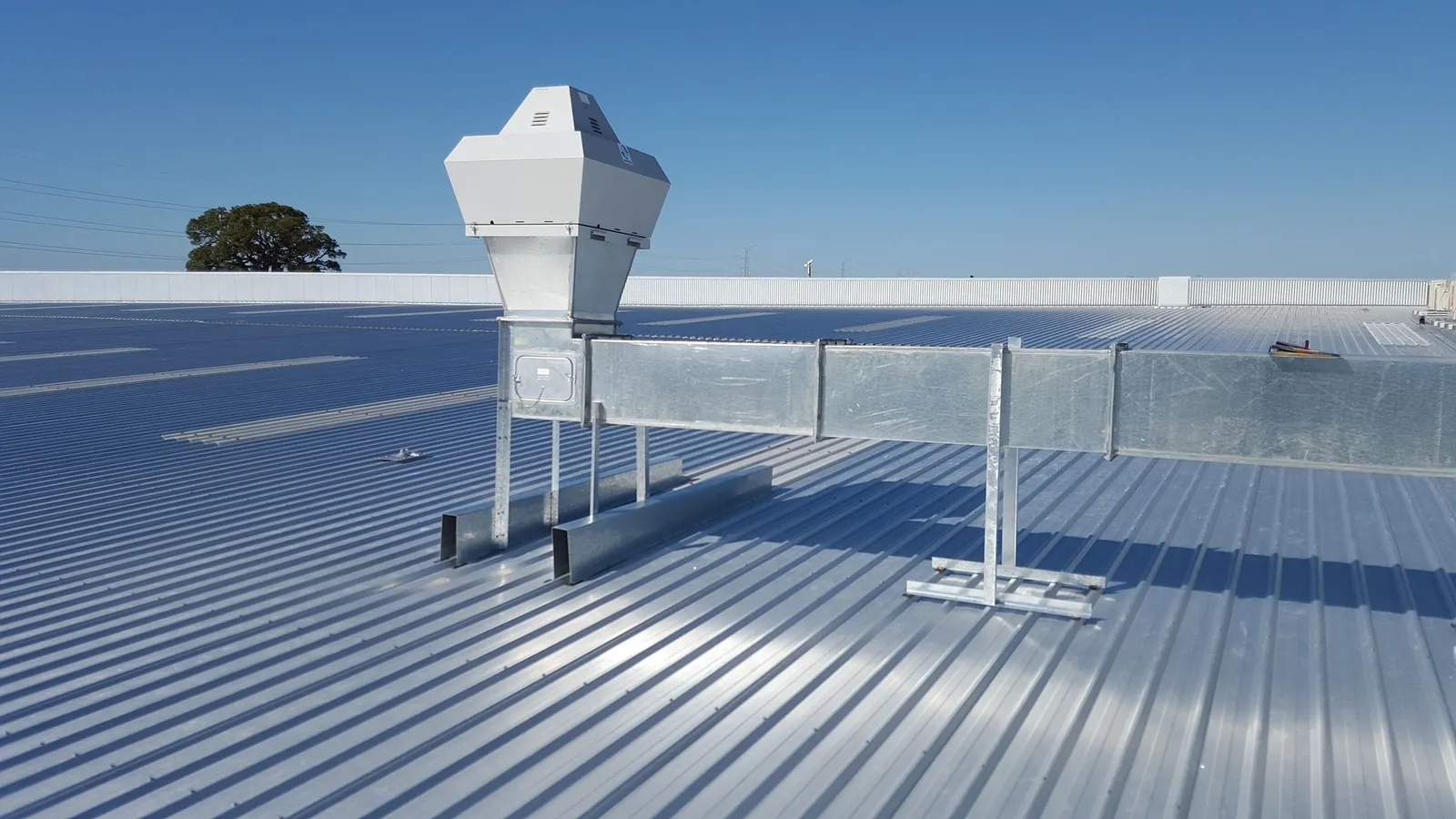
Flat Roof Repair in Weatherford, TX
On a flat roof, what is under the membrane decides whether this is a repair or a replacement, so it gets tested before anything is quoted.
A flat roof repair starts by probing the insulation underneath.
Flat roof repair in Weatherford, TX, and what the work covers
Order matters more on a low-slope roof than on any other, because the two failure modes look identical from above and cost differently by a factor of ten. A seam lifted over dry insulation is an afternoon; over three years of trapped water it is a section of roof. A test comes before a figure.
Hail here arrives with straight-line wind behind it. On a house that is missing shingles anybody can see; on a membrane it is bruising and lifted laps invisible from the parking lot, sometimes for a season.
The heat holds for months here, and a January day often swings from the low 30s up near 56, so the membrane and its edge bars work through that spread.
May is the wettest month here and July the driest, so a summer walk can report nothing on a roof that leaks in spring. If it leaked in May, get it looked at on the strength of May.
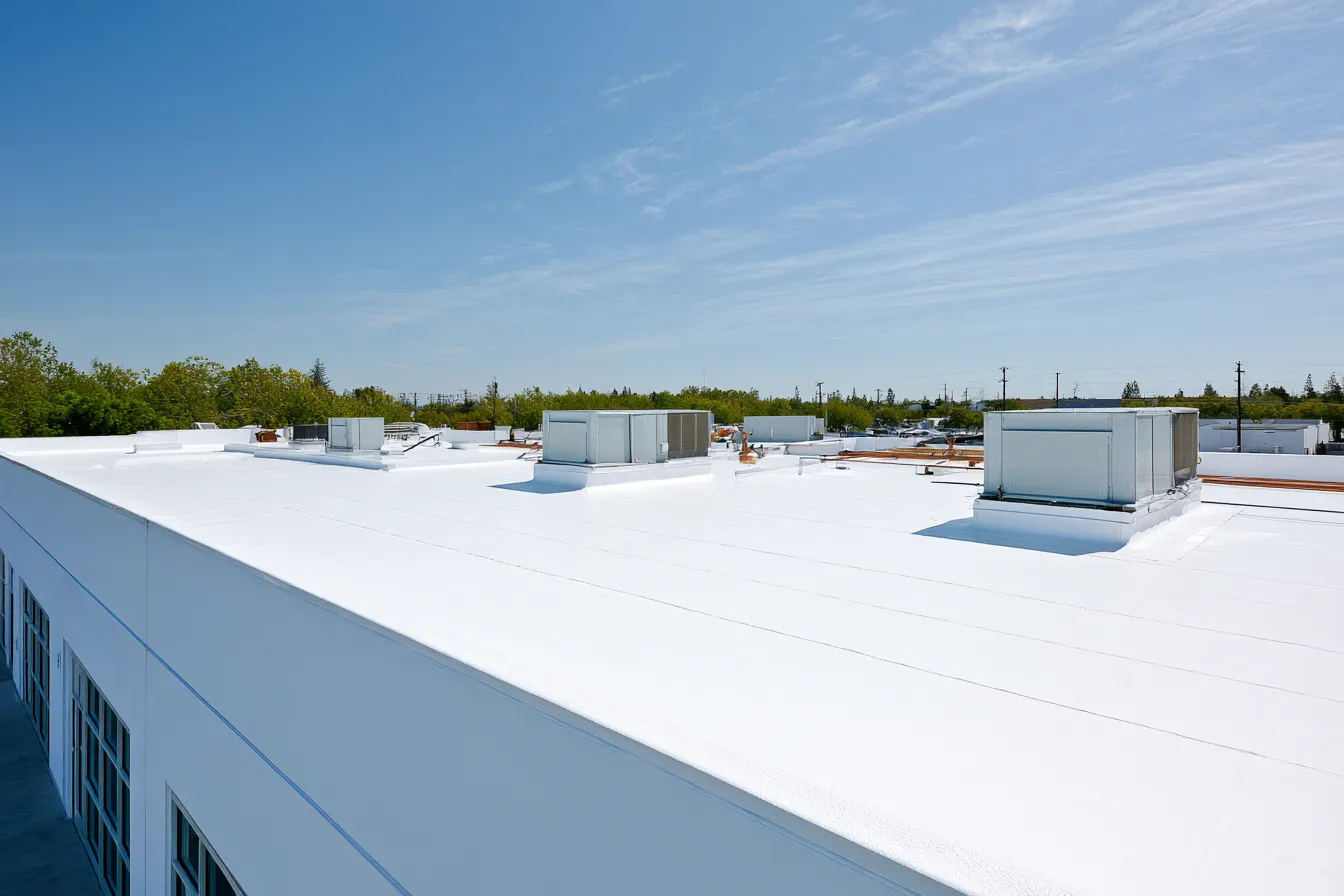
Where the water actually entered
The search works uphill of the interior stain, because water crosses the deck before it drips.
Seams, terminations, penetrations
Laps, wall and parapet flashings, drains and every curb. That is where low-slope roofs let go.
A check under the surface
Insulation probed or scanned for trapped water before anybody puts a number on the repair.
Wet material comes out
Saturated insulation and unsalvageable membrane leave the roof. Covering water buys nothing.
Rebuilt in the system already there
The failed detail is opened and remade in the same membrane, so the repair is compatible with it.
Drainage checked at the low spots
Drains, the wall outlets that let water off the edge, and any overflow looked at and cleared, since ponding caused a lot of this.
Photographs for the building file
What was found, what was replaced, what was left alone, and the roofer's workmanship terms.
Where a low-slope roof usually gives out
A low-slope roof almost never gives out in the open field. It goes at a joint, at a low spot, or at a hole somebody sealed once and never looked at again.
Water still there a day later
Ponding is the hardest single thing on a flat roof, and it also adds weight the deck has to carry.
A lap that has lifted
An open seam lets water under the membrane years before the open field wears out.
Flashing pulling off a parapet
Where the roof turns up a wall the detail takes the most movement, so it gives up first.
Curbs, pipes and drains
Every unit curb, vent and drain is a hole that was sealed once and has been moving ever since.
Punctures from foot traffic
Dropped tools and dragged equipment open holes small enough to soak a whole insulation board.
Blisters and a chalky field
Bubbles mean trapped moisture or air. A brittle, chalked surface means the sun has had its years.
How a flat roof repair gets scoped on a Weatherford building
The test comes before the number. Most low-slope callouts open with a patch; ours open with naming the system, because the wrong patch material will not bond to it however carefully it goes on.
Find the entry, not the drip
A roofer works uphill from the stain through the seams, flashings and penetrations above it.
Test the insulation
Dry and sound is a repair. Widespread saturation is not, whatever the surface looks like.
Repair, recover or tear off
An isolated failure gets rebuilt. Wet insulation or two existing layers points at a tear-off.
Do it and write it down
The agreed work list, the photographs, and the roofer's workmanship terms handed over together.
Flat roof questions building owners ask
Repair against replacement, whether a coating buys time, and why the same spot keeps leaking. Each answer below points back at what a moisture test would settle on your own roof.
Have a Parker County roofer walk your flat roof
Give the building and where the water shows inside. Our roofers trace the entry point, test the insulation, and set out the repair-or-replace answer with the line items attached. If the answer is that a coating buys you five more years, that is a legitimate answer and you should get it in plain terms, on your own timetable.