
Gutter Installation in Weatherford, TX
A gutter installation gets sized off the roof above it, and the fall is set before the first bracket goes up.
Second week of May, rain coming down hard, water arcing clean over the front lip of the gutter.
What gutter installation in Weatherford, TX covers
The rain here arrives in bursts, so a year of it lands across a handful of hard hours, and that peak rate is what the gutter carries.
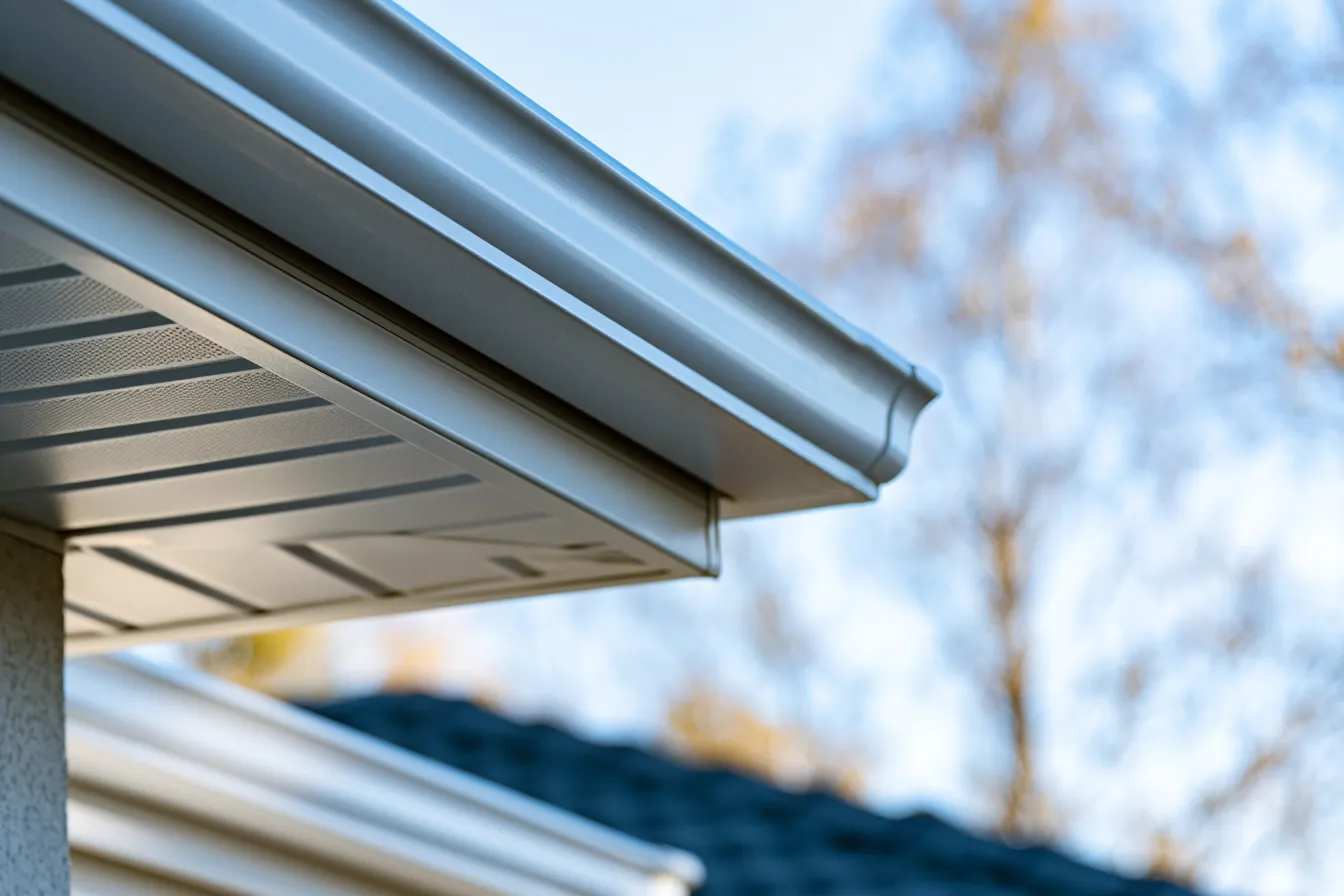
Seamless aluminum is roll-formed on site into one trough per run, with joints only at corners and outlets. Five inch K-style covers most houses in town; six inch carries roughly 2.0 gallons per foot against about 1.2. Coil comes .027 of an inch standard, .032 heavy-duty.
The wood is the part homeowners never budget for. Fascia behind an older gutter line has carried water for decades, and soft wood will not hold a fastener under a full trough.
A January day here swings from the low 30s to the mid 50s, so water standing in a trough freezes overnight and lets go by afternoon.
Our roofers measure the run, count the outlets and put the footage on its own line, because a gutter quote with no footage is a guess with a number attached.
Reading what the roof sheds
Roof area, pitch and valley count first. Those size the trough.
Five inch or six
Five inch K-style suits most houses here; six inch goes on big, steep or complicated roofs.
Rolled at the house
Seamless aluminum formed on site into one length per run, joints only at corners and outlets.
The coil thickness decision
Standard .027 aluminum, or the stiffer .032 where hail and ladders have already dented one line.
Outlets sized with the trough
Two by three downspouts with five inch, three by four with six, roughly one every thirty to forty feet.
The fascia underneath
The board is inspected and repaired before a hanger goes into it. Soft wood sags under a full run.
Discharge well past the slab
Water carried clear of the foundation, five feet out being the common guidance. The last few feet matter.
What a failing gutter line does to the rest of the house
The gutter is rarely the expensive part. What it soaks on the way past is.
Fascia going soft
The board the gutter hangs on rots first, and then it cannot hold what is hanging on it.
Soffit staining
Water wicking back under the roof edge shows on the panel beneath before anywhere else does.
A trench under the eave
Channeled dirt and splashed mulch mark exactly where the trough is not catching anything.
Paint lifting at the roofline
Bubbling paint below a gutter run is a water story rather than a paint story.
Gray stripes down the face
Vertical streaks on the outside of the trough mean water went over the lip, not through the outlet.
Water still sitting days later
Standing water is lost pitch or a blocked outlet, and in January it freezes at night and lets go by noon.
How gutter installation gets done in Weatherford
Most of the first step is measuring water. The metal part is quick by comparison.
The edge and the roof above it
A roofer measures the runs, checks pitch and outlets, and works out what the roof sheds.
The wood comes first
Rotted fascia is replaced before a hanger goes in, or the new run sags the way the old one did.
Rolled on site
Coil runs through the machine at the house and comes out as one continuous trough per run.
Pitch, outlets, discharge
Hung to fall toward the outlets, downspouts matched to the trough, water carried clear of the slab.
Run water through it
A hose at the far end of each run shows whether it drains or holds. Cheapest check on the job.
Gutter questions that come up in Weatherford
Sizing, guards, timing against the roof, and where the water is supposed to end up. Nearly all of it comes down to what happens in the first hard hour of a Parker County storm.
Get the gutter line looked at with the roof
Describe what the water does in a hard rain. A roofer walks the full run, presses on the wood behind it, and itemizes the footage, the corners, the outlets and any fascia repair on their own lines, saying so too if the roof wants looking at. The itemized sheet is yours to keep.