
Roof Repair in Weatherford, TX
A roof leak almost never starts where it shows, so a repair begins by finding where it does.
A brown ring on the hallway ceiling after a wet week, and nothing obvious anywhere on the roof above it.
What a roof repair in Weatherford, TX covers
A repair is sized by what failed, which means the first job is finding it. Water runs the deck before it drips, so it shows up downhill of the hole, and a patch aimed at the stain fixes nothing at all.
While water is coming in, every useful move is inside the house. Put a tote under the drip, pull furniture clear of the wet, and photograph the ceiling, the floor and whatever the water touched on its way down. A policy expects reasonable steps to limit further damage, and reasonable temporary costs are covered on a covered loss, so hold on to the receipts. The roof surface itself waits for dry weather and for somebody with fall protection.
Age is part of the picture. A fair number of repairs here land on a covering that is already the second one on that deck, and on an older assembly the sheathing and the underlayment matter as much as the shingle.
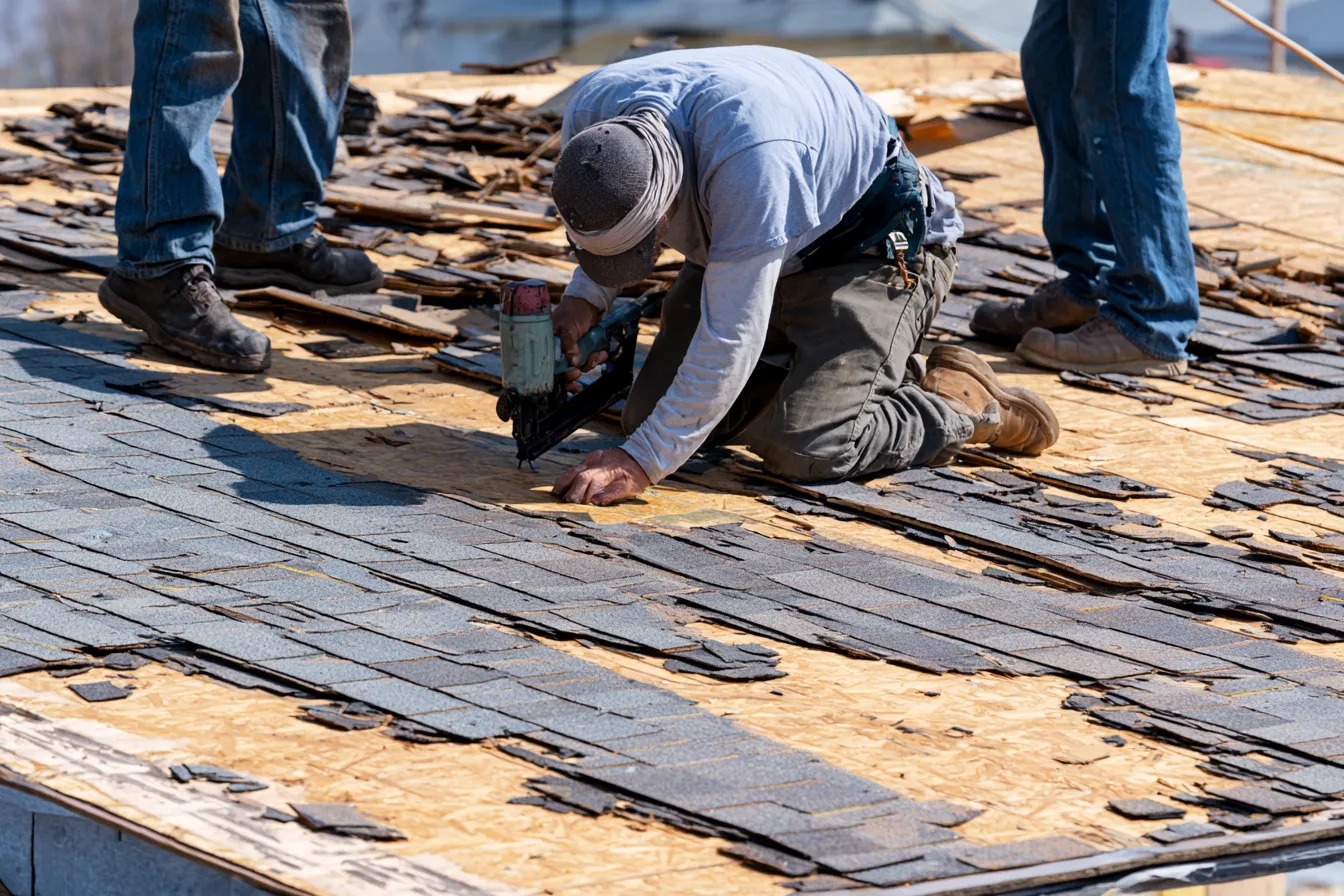
A water test or a daylight check
Where the path is unclear, a hose run on the suspect slope or daylight through the sheathing settles it before anything comes apart.
The failed part rebuilt
A pipe boot, a step-flashing run, a valley or a cracked field gets rebuilt as an assembly instead of sealed over.
Deck and underlayment underneath
Wet sheathing is cut back to sound wood and the underlayment relapped, because fasteners need something solid to bite.
Sealant used only as sealant
Caulk belongs at a termination, never as the repair itself. A sealed-over flashing failure returns with the next wet spell.
What the patch will look like
Weathered shingles never match new ones exactly. Ask how close the match will get before anyone touches the slope.
Findings and terms you keep
What failed, what was replaced, what was deliberately left alone, and the workmanship terms in writing under the roofer's name.
The leaks that wait and the ones that do not
Sorted by how much time you have, which is the one thing a stain on the ceiling never tells you. The top rows are the ones a roofer wants to hear about in the same week you notice them.
Water near a light fixture
Water tracking to a ceiling box or along a wire run is an electrical problem first. Kill the circuit, then deal with the roof.
A ceiling bulging or sagging
Trapped water is heavy. A swollen paint blister or a soft patch of drywall can let go with no warning at all.
Bare deck showing after wind
Underlayment or sheathing visible anywhere is an open roof, and the next rain will use it.
Damp insulation in the attic
Wet batts and dark streaks under the deck mean the leak has been running longer than the stain suggests.
An old mark that stopped growing
A dry stain from a leak already fixed can wait for a scheduled look. Damp is the difference, so put a hand on it.
A split pipe boot, no leak yet
That rubber collar hardens and splits while the shingles around it are still sound. Cheap this week, decking later.
How a roof repair gets handled in Weatherford
This is the order a repair runs in here, from the description you send to the clean-up. The first move is yours, and a roofer takes it from there.
Where the water shows
Which room, which part of the ceiling, how long it has been going on, and a picture if there is one.
The source located
A roofer works the slope above the stain and the attic beneath it until they find the path.
One figure, then the work
The roofer tells you what failed, what putting it right involves, and what it costs, before a shingle moves.
Fixed and recorded
The roofer rebuilds the failed assembly, clears the ground, and hands you what they found and what they did.
Repair questions Weatherford homeowners bring up
Timing, permits, insurance, and the point where patching stops making sense. That last one is what most homeowners came here to settle, so it gets the longest answer.
Have the leak looked at by a Weatherford roofer
Describe the room, the spot and when it started. Our roofer reads it, comes out, and does the work. You can tell us to stop at any point and it stops there.